
You’ve got a missing tooth. Maybe it’s been that way for a while. Maybe it just happened. Either way, you’re ready to do something about it. But then you start researching. And suddenly you’re hit with a bunch of options, technical terms, and wildly different price tags. It can feel overwhelming.
Two of the most common solutions are dental implants and dental bridges. Both can replace missing teeth. Both can restore your smile. But they work completely differently, and the right choice depends on your situation, goals, and budget.
What Is a Dental Bridge?
Think of a dental bridge like a highway overpass. It fills the gap. A traditional bridge uses the teeth on either side of the missing tooth as support. Those teeth get crowned, and a false tooth (called a pontic) sits in the middle, bridging the space.
The Pros:
- It’s fast. Usually, it takes two visits spread over a couple of weeks.
- It’s also typically less expensive upfront, and insurance is more likely to cover it.
The Cons:
- To place the bridge, we have to reshape the healthy teeth on either side. That’s a permanent change to teeth that might have been perfectly fine.
- Bridges also don’t last forever. Most need replacement after five to fifteen years.
- Because it’s harder to floss under a bridge, the supporting teeth can develop decay over time.
What Is a Dental Implant?
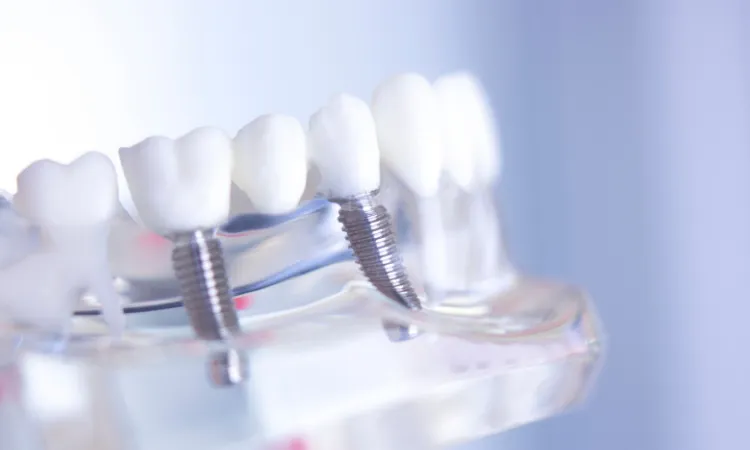
A dental implant is a completely different approach. Instead of using neighboring teeth for support, an oral surgeon places a small titanium post directly into your jawbone. That post acts like a new tooth root. Over a few months, it fuses with your bone, a process called osseointegration. Once that’s done, we attach a custom crown.
The Pros:
- An implant is the closest you can get to a natural tooth.
- It doesn’t touch your other teeth.
- It doesn’t rely on them for support.
- With proper care, it can last a lifetime. You brush it, floss it, and forget it’s even there. No cavities. No decay. Just a tooth that works.
The Cons:
- It takes longer. The whole process can take several months.
- It’s also more expensive upfront, and insurance doesn’t always cover the full cost.
- In some cases, you might need a bone graft first if your jawbone isn’t thick enough to support the implant.
So How Do You Choose?
There’s no one-size-fits-all answer. But here are a few questions to ask yourself:
- How important are your neighboring teeth? If the teeth next to your gap are healthy and strong, an implant lets you keep them that way. A bridge requires reshaping them, which means you’re committing those teeth to a lifetime of dental work.
- How long do you want this to last? A bridge is a solid medium-term solution. An implant is a long-term investment. If you want something you won’t have to think about again, an implant is usually the better bet.
- What’s your timeline? If you need something quickly, a bridge can be placed in a couple of weeks. An implant takes months to fully heal. If you’re not in a rush, the implant’s longevity often makes the wait worth it.
- What’s your budget? Bridges cost less upfront. But over a lifetime, you might end up paying for multiple replacements. An implant costs more initially but often costs less in the long run.
Restore Your Bite At Signature Dentistry
Both implants and bridges can restore your smile and your confidence. Neither is “wrong.” The right choice depends on your teeth, health, timeline, and goals.
At our Plano dental office, Dr. Grapevine takes a functional approach to every restoration. That means we don’t just fill the gap. We look at your whole bite, your jaw health, and how everything works together. Then we help you choose the option that makes the most sense for you, not just today, but for years to come.
Not sure which way to go? Request an appointment online. We’ll walk you through your options, answer your questions, and help you make a decision you feel good about.